
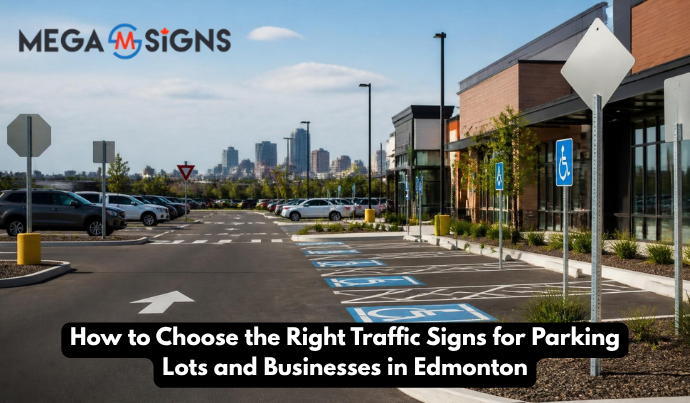
Choosing the right traffic signs for a business or parking lot is important for keeping vehicle movement organised and helping visitors understand where to go. From entrance and exit signs to parking restrictions and directional signs, each sign should communicate a clear message.
For businesses in Edmonton, selecting traffic signs involves more than choosing a design. You also need to consider visibility, weather exposure, installation location, and the requirements that apply to your property.
If you are comparing traffic signs in Edmonton, this guide explains how to choose suitable signage, which signs commercial properties may need, and what to consider before ordering.
Why Do Businesses Need Traffic Signs?
Commercial properties often have vehicles, pedestrians, delivery drivers, employees, and customers using the same areas. Without clear directions, visitors may enter through the wrong driveway, park in restricted spaces, or struggle to find loading areas.
Appropriate traffic signage helps communicate instructions and makes the property easier to navigate.
Businesses may need traffic signs for:
- Customer and employee parking areas
- Warehouse and industrial facilities
- Shopping centres and retail properties
- Private roads and driveways
- Loading and delivery zones
- Construction and maintenance areas
- Commercial developments and office complexes
The signs required depend on the property’s layout, intended use, and applicable regulations.
7 Traffic Signs to Consider for Your Commercial Property
1. Parking Restriction Signs
Parking restriction signs communicate where vehicles can and cannot park. Examples include No Parking, Reserved Parking, Customer Parking, and Loading Zone signs.
These signs can help property managers communicate parking rules to visitors and employees. If the signs are intended to support parking enforcement, make sure their wording, placement, and design comply with applicable City of Edmonton requirements.
2. Entrance and Exit Signs
Clearly marked entrances and exits help drivers identify the correct route when approaching or leaving a property.
These signs can be useful for office complexes, retail locations, warehouses, and larger parking lots. Position them where drivers can see them before reaching a decision point.
3. Directional Traffic Signs
Directional signs use words, arrows, or other clear visual cues to guide drivers around a property.
Common examples include directions to visitor parking, deliveries, receiving areas, and designated vehicle routes.
For properties where customers also need help navigating the building or grounds, wayfinding signs can complement traffic signage.
4. Speed-Related Signs
Speed-related signs communicate speed restrictions or expectations in areas where they apply. They may be relevant to private facilities, internal access roads, and industrial properties.
Before installing a speed limit sign, confirm the applicable requirements for the location. A custom sign should not be treated as a substitute for an authorised regulatory sign where one is required.
5. Warning Signs
Warning signs alert drivers to potential hazards, unusual conditions, or restricted areas.
Depending on the site, these may communicate low clearance, construction activity, vehicle crossings, or other specific risks. Choose the message based on the actual hazard and applicable safety requirements.
6. Loading Zone Signs
Businesses that receive regular deliveries may benefit from clearly identifying loading and unloading areas.
A suitable sign can help drivers distinguish delivery areas from customer parking and other restricted spaces. The sign should be easy to see from the approach route and should communicate the restriction clearly.
7. Pedestrian Safety Signs
Where vehicles and pedestrians share space, signage may help identify pedestrian routes, crossings, or areas that require additional attention from drivers.
The sign type and placement should be based on the site’s actual layout and safety assessment. Where formal traffic-control measures are required, follow the applicable standards.
How to Select Traffic Signs for Edmonton’s Weather
Outdoor signs in Edmonton may be exposed to snow, rain, strong sunlight, wind, and substantial seasonal temperature changes. These conditions should be considered before selecting materials and mounting hardware.
Choose Suitable Materials
Ask your sign provider which material is appropriate for the intended location and expected service life. Outdoor signs may require corrosion-resistant components and finishes suited to the environment.
Consider Reflectivity and Night-Time Visibility
Some traffic-control applications require specified reflective performance. Other private-property signs may benefit from improved visibility in low-light conditions.
The appropriate reflectivity depends on the sign’s purpose and the standards that apply. Do not assume that every custom sign meets official roadway requirements.
Plan for Secure Installation
The mounting method should suit the sign’s size, location, and exposure to wind and weather. Consider the supporting surface, post or bracket requirements, and maintenance access.
Keep Signs Clear and Legible
Snow, dirt, vegetation, and nearby structures can affect visibility. Plan where signs will be installed and include them in routine property inspections.
What Should You Check Before Ordering Traffic Signs?
Before placing an order, answer these questions to help identify the right signage.
What is the sign’s purpose? Decide whether you need to direct traffic, communicate parking restrictions, identify a loading area, or warn about a hazard.
Where will it be installed? A sign in a private parking lot may have different requirements from a sign used on a public road or in a construction work zone.
Who needs to read it? Consider drivers approaching from different directions, delivery vehicles, employees, and visitors unfamiliar with the property.
What size and material are appropriate? Choose specifications based on viewing distance, environmental exposure, mounting conditions, and any applicable standards.
Are approvals required? Confirm requirements with the relevant authority before installing signs on or affecting a public roadway.
How Much Do Traffic Signs Cost in Edmonton?
The cost of traffic signs depends on the sign’s specifications and installation requirements. A simple parking sign may have a different price from a large directional sign or a sign requiring specialised reflective materials.
Pricing can be influenced by:
- Sign size and material
- Standard or custom wording
- Reflective properties and finish
- Custom graphics and fabrication
- Posts, brackets, and mounting hardware
- Quantity ordered
- Installation complexity
For a useful quote, provide the intended location, sign message, dimensions, quantity, and any required specifications. If the project involves official traffic control, establish the required design and approvals before production.
Traffic Signs vs. General Outdoor Signs: What’s the Difference?
Traffic signs communicate instructions, warnings, restrictions, or directions related to vehicle and pedestrian movement. General outdoor signs may instead display a business name, promote a service, or identify a building.
For example, a No Parking sign serves a different purpose from a storefront sign displaying a company’s name.
Businesses may need both types of signage. Explore traffic signs for traffic-related applications and outdoor signs for broader exterior identification and communication needs.
Choosing the correct category helps ensure that each sign serves its intended purpose.
Where Can Edmonton Businesses Get Traffic Signs?
When comparing sign providers, explain how the signs will be used and where they will be installed. A provider can then discuss suitable materials, sizes, finishes, and fabrication options for the project.
Mega Signs offers signage solutions for commercial applications in Edmonton. Visit the Traffic Signs service page to explore the service and discuss your requirements.
Before ordering, prepare a list of required signs and confirm whether your project involves private-property signage, official road signs, or temporary traffic control. These applications may have different specifications and approval requirements.
Frequently Asked Questions
Which traffic signs are useful for a commercial parking lot?
Depending on the layout, a parking lot may need entrance and exit directions, parking restrictions, reserved spaces, loading-zone signs, and warnings about specific hazards. The appropriate selection depends on the property’s needs and applicable rules.
Are custom traffic signs suitable for private property?
Custom signs can be suitable for many private-property applications, provided their design and installation meet applicable requirements. Signs intended for official traffic control may need to follow specific standards or approval processes.
What material should I choose for outdoor traffic signs in Edmonton?
Choose a material suited to the sign’s location, weather exposure, mounting method, and expected service life. Ask about durability, surface finish, reflective requirements, and maintenance before ordering.
Do I need approval to install traffic signs?
Requirements depend on the sign and its location. Signs on private property may be subject to municipal requirements, while signs affecting public roads or construction traffic may require authorisation or an approved traffic-control plan.
How can I improve traffic flow in a business parking lot?
Start by reviewing entrances, exits, vehicle routes, pedestrian movement, and areas where drivers become confused. Use clear, appropriately positioned signage and seek professional guidance where the layout requires additional traffic-management measures.
Can Mega Signs help businesses choose traffic signs?
Mega Signs lists traffic signs among its signage services. Contact the company to discuss the sign types, materials, quantities, and project requirements for your commercial property.
Get the Right Traffic Signs for Your Edmonton Business
The right traffic signs can make a commercial property easier to navigate and help communicate important parking instructions and safety messages. Start by identifying the needs of your site, selecting readable designs, and confirming the requirements that apply to the installation.
For traffic signage enquiries, contact Mega Signs to discuss your project.
Mega Signs
9134 34A Ave NW, Edmonton, AB T6E 5P4
Phone: (780) 461-7446
Email: info@megasigns.ca
Visit Mega Signs to explore signage options for your business.